


How To Fix a Leaking Soft Top Convertible

Contents:
- How to identify signs of a convertible water leak
- Common causes of convertible leaks (& how to fix them)
- Door seals – clean, rejuvenate, & rebond
- Door Seals – When to Replace
- Drains – Clearing Channels to Prevent Water Build-Up
- Door Membranes – Small Tears Cause Big Problems
- Windscreen – Check Recent Replacements First
- Fabric Hoods – Treat, Repair, or Replace?
- What To Do After a Convertible Roof Leak Repair
- Regular Servicing Is the Best Prevention of Water Ingress
As the UK’s no.1 convertible roof repair specialists, we know a thing or two about how to stop convertible car water leaks. Our advice is tried and tested, and the information in this article is the same information we give to our customers suffering from water ingress.
Convertible cars are a joy to own, but that pleasure vanishes fast when you find water in the cabin. Damp carpets, unpleasant smells, and the risk of costly damage to wiring and other components are every cabriolet owner’s worst nightmare.
However, if you’ve experienced this recently, all hope is not lost. This article highlights the signs that you may have a convertible roof leak and shows you how to prevent and resolve the most common causes. We’ll explore quick DIY checks and when it’s time to call a specialist to prevent further damage!
How To Identify Signs of a Convertible Water Leak
The majority of convertible water leaks leave telltale signs of where the issue started, such as:
- Water stains on upholstery
- Musty, damp smells
- Rust on the inside of the vehicle or around metal components within the roof system
- Condensation and fogged-up windows
- Obvious dripping sounds when driving or after rainfall
- Mildew on your upholstery
If you notice one or more of these warning signs, you should immediately take steps to find the source of the leak. The simplest way to confirm a leak is by spraying water from a garden hose over your vehicle for a few minutes. Then, turn off the hose and get in the car to look (and listen) for leaks.
A word of caution: never use a high-pressure washer on your convertible to test for leaks, as your vehicle’s seals are not built to withstand high-pressure water!
Common Causes of Convertible Leaks (& How To Fix Them)
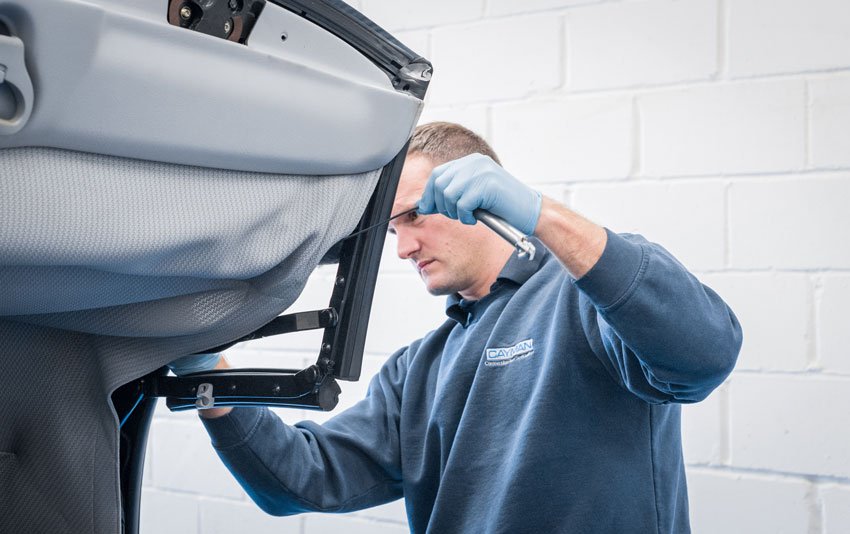
We often see neglected cabriolets with malfunctioning roofs come into the workshop. However, many of the repairs that we perform on these vehicles can be avoided through maintenance of their convertible roof.
Fortunately, by following our tips, you can avoid being on the receiving end of a wet convertible cabin:
Door Seals – Clean, Rejuvenate, & Rebond
Door and window seals are supposed to form a watertight cushion when everything’s closed, but over time, they trap road grime, sap, and bird droppings and can unstick from the paint. That dirty, unbonded surface is exactly where water finds a way past the seal and into the cabin.
To fix this, remove surface dirt, dry the seal and the car’s paintwork, then rebond the strip using an appropriate adhesive. Before reattaching, treat the rubber to restore flexibility; a high-quality seal lubricant (like Krytox) helps the rubber regain elasticity and improves the long-term seal. Don’t lubricate over dirt, and expect this job to take a little time if you want a proper result.
Door Seals – When to Replace
Rubber that’s visibly cracked, shrunken, or torn can’t be fixed with cleaners or lubricants, as age will have compromised the material. Therefore, it will need to be replaced to stop water from leaking through.
Remove the old seal and any leftover adhesive so the new strip can bond to a smooth, clean surface. Accurate alignment is very important for a watertight fit, so if you’re unsure, have a specialist fit the new seal.
Drains – Clearing Channels to Prevent Water Build-Up
Convertibles divert rainwater through channels into drain outlets; when those drains clog with muck and leaves, the water backs up into the car and causes corrosion or interior soak-through.
Check and clear the drain channels regularly - especially after heavy leaf fall or long drives on dirty roads. A simple test is to pour a little water into the channel and watch it exit under the car. If it doesn’t, clear the blockage with a soft brush, pipe-cleaner, or low-pressure hose and repeat the test.
Door Membranes – Small Tears Cause Big Problems
Behind the car door card, there’s a thin plastic membrane that keeps water away from the carpet. If it’s been torn (common after speaker upgrades or repairs), water can pass straight through into the footwell.
Remove the door card and inspect the membrane; small tears can sometimes be patched, but larger damage should be replaced. If speakers or previous repairs are present, check that fixings haven’t nicked or stressed the membrane.
Windscreen – Check Recent Replacements First
A poorly fitted windscreen or a seal that wasn’t installed correctly is an obvious source of leaks, especially if the problem started after a replacement.
If you suspect the windscreen is a cause of your convertible water leak, have it inspected and, if necessary, removed and refitted by a qualified technician. Correctly removed screens can usually be reused, but a proper reseal is essential to stop water ingress.
Fabric Hoods – Treat, Repair, or Replace?
Factory fabric roofs lose their water repellency with age; as the coating wears, the weave can become porous, and any nicks or tears turn into guaranteed leak points. Fabric can also shrink over time and pull away from seals.
For a long-term solution, replace the fabric. For a short-term improvement, thoroughly clean and dry the roof, then apply a quality water-repellent treatment (Renovo is one option we recommend). Note that patching or treatments won’t fix rips or severe shrinkage; in these cases, a new hood fitted by a trimmer is the right call.
What To Do After a Convertible Roof Leak Repair
If your vehicle has been sent in for a repair, it is important to retest for leaks once your cabriolet is back home. Run thorough water tests (spray the suspect areas, pour water into drain channels, and watch for escape points) to confirm the problem is fixed, and nothing else is weeping in.
If the interior became wet while the leak was active, dry it out quickly to prevent lingering damp and condensation. Use a wet/dry vacuum on carpets (removing them first makes this far more effective), place a dehumidifier or fan inside overnight, and leave windows or the roof open in warm weather to help circulation.
For soaked interiors or signs of persistent damp (musty odour, condensation on windows, or electronic faults), consider professional drying - trapped moisture can corrode wiring and cause mould if left too long.
Regular Servicing Is the Best Prevention of Water Ingress
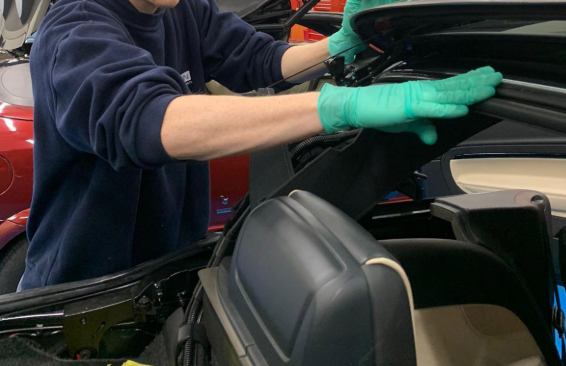
The most reliable way to care for your vehicle’s folding roof system is to have it regularly serviced by a professional. A skilled technician will ensure that your vehicle’s seals and mechanical components are in good working order. They will also be able to perform extensive water ingress testing to find the source of any leaks.
Cayman Autos offers clients an affordable annual roof service program, which will help to prevent many of the common issues that lead to convertible water leaks. This package includes:
- Full inspection of all roof seals to check for debris and grime
- All convertible roof hinges and pivot points are re-greased and lubricated
- All hydraulic fluid levels are checked
- Drains are checked and cleared
Using this service will help your vehicle’s folding roof remain in good working order and stop leaks before they start. To get started with us, contact us today on 01737 761599. Or fill out our online form.


